The Last Presence of Nature
On presence, perception, and our enduring relationship with horses
Before Horses
My love for nature came before my love for horses. Long before I started photographing them, before I learned to ride, before I knew anything about equestrian sport, I was fascinated by fields, forests, changing skies, wind moving through grass and the strange sensation that nature existed independently from us. Looking back, I sometimes wonder whether my interest in horses emerged from that earlier fascination. Even today I am not entirely certain whether I photograph horses because I am interested in horses themselves or because they remain one of the last visible manifestations of nature within human life.
A Persistent Image
This question has become increasingly important to me because horses occupy a curious position in contemporary society. Most people no longer depend on them. They do not transport us, cultivate our fields or determine the outcome of wars. In practical terms, they have largely disappeared from everyday existence. Yet their image continues to inhabit literature, cinema, mythology and collective imagination with remarkable persistence.
Children who have never touched a horse still draw them. Adults who have never ridden one often stop to watch them in a field. Their practical importance has diminished, but their symbolic presence remains surprisingly intact.
History offers part of an explanation. For thousands of years horses accompanied human beings through almost every aspect of life. They were present in travel, agriculture, trade, warfare and migration. Entire civilisations were shaped through their partnership with this animal.
Yet history alone does not seem sufficient.
Many animals have shared our lives, but few continue to exert the same emotional and imaginative power.
Beyond Domestication
What interests me is the possibility that horses represent one of the last remaining points of contact between modern humans and a form of nature that has not been entirely absorbed into our systems of control. They live beside us and with us, yet they never become entirely ours.
Even the most familiar horse retains something that resists complete domestication. Not wild in the romantic sense of the word, but wild in the sense that it continues to belong partly to a world that exists beyond human intention. This may also explain why so many people describe their time with horses in terms that resemble meditation.
I do not think horses magically remove thoughts from our minds. Rather, they redirect attention.
Contemporary philosophy, particularly the work of Maurice Merleau-Ponty, reminds us that perception does not happen solely inside the head. We encounter the world through the body. We understand reality through participation rather than observation alone. A horse makes this difficult to ignore. Faced with a living being whose movements, emotions and reactions require constant awareness, attention is gradually pulled away from internal narration and returned to the immediate world.
The Space Between
Perhaps this is why I have become less interested in photographing horses as subjects and more interested in photographing the space that emerges around them. The longer I work, the less I find myself searching for decisive moments or spectacular gestures. Instead, I become fascinated by atmosphere, anticipation, silence and traces. What remains after movement has disappeared often seems more revealing than the movement itself. In many ways, this shift has changed my understanding of photography. I no longer see the camera primarily as a tool for documenting events. It has become a way of investigating presence. Not presence as a philosophical abstraction, but presence as a lived experience that is often difficult to describe.
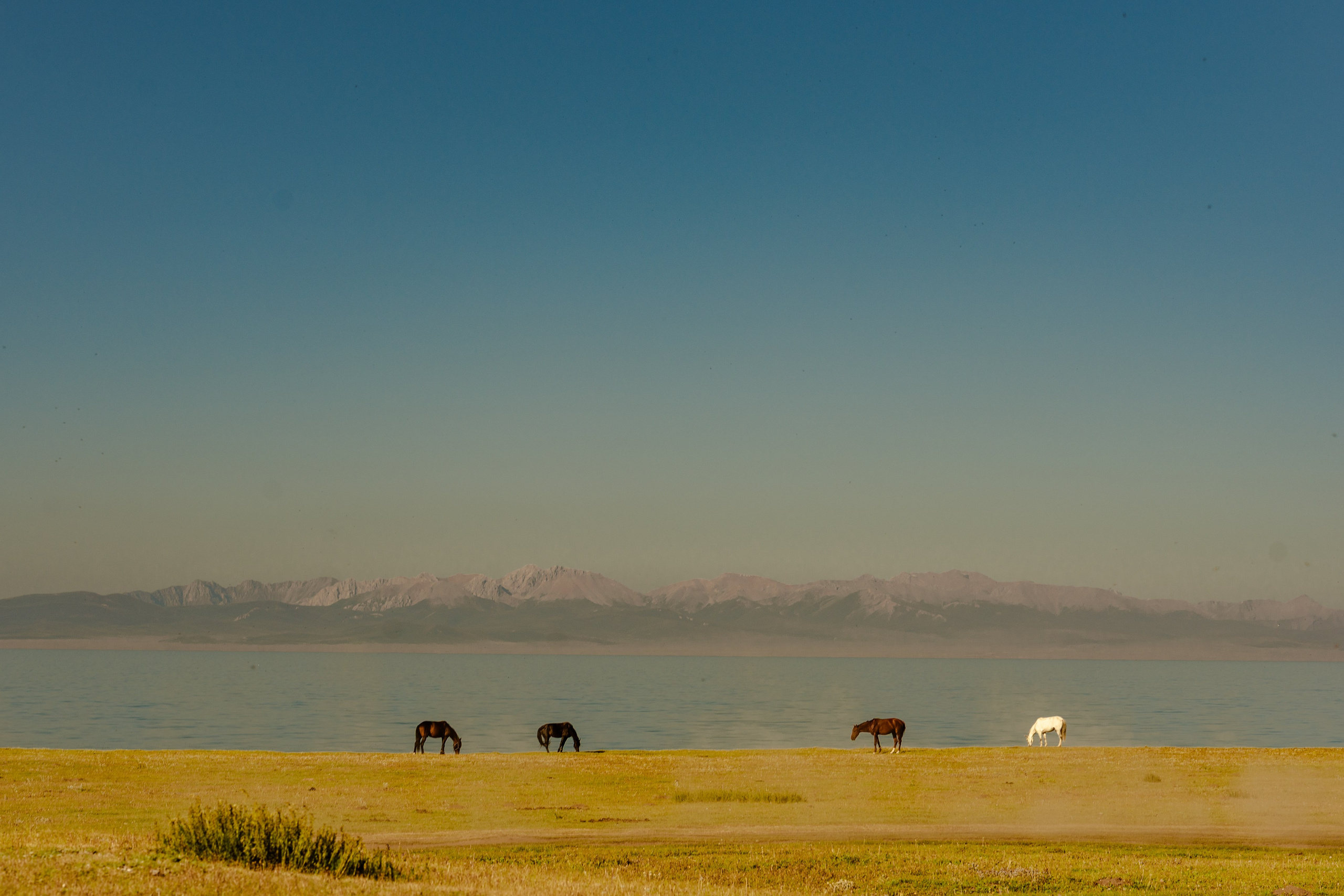
A horse standing in a field.
Mist moving across a landscape.
The density of humid air before a storm.
The sensation that a place remains occupied even when apparently empty.
These experiences resist explanation, yet they continue to affect us.
Air
Sometimes I wonder what would remain if the horse itself disappeared from the photograph. The answer that returns again and again is surprisingly simple: air. Not empty space, but air as atmosphere, as density, as the invisible medium through which presence becomes perceptible.
Perhaps this is why my recent work has become increasingly drawn toward horizons, weather, traces and forms that seem to hover between appearance and disappearance. What interests me is no longer simply the animal. It is the condition that allows the animal to resonate within human experience. The horse, in this sense, becomes more than a subject. It becomes a way of asking a larger question.
In a world that is increasingly mediated by screens, information and abstraction, why do certain encounters still feel capable of returning us to ourselves? I do not yet have a complete answer. What I know is that horses continue to occupy a place in our imagination that exceeds their practical function. Their presence persists long after their necessity has faded. Perhaps this persistence tells us less about horses than it does about ourselves and about our continuing need for meaningful contact with the living world.